
x



In March 2025, Swiss-based ABILITY Neurotech officially spun out of the Wyss Center for Neuro and Bioengineering in Geneva, and in so doing became Europe’s flagship brain-computer interface (BCI) company. Rooted in eight years of research and $50 million investment, ABILITY is charting a clinical path to restore voice, movement, agency and autonomy for people living with severe neurological conditions.
For the Wyss Center, the launch of ABILITY represents a defining example of its mission to transform pioneering science into tangible, ethical, patient impact, advancing the vision of the Center and its philanthropist founder, Hansjörg Wyss.
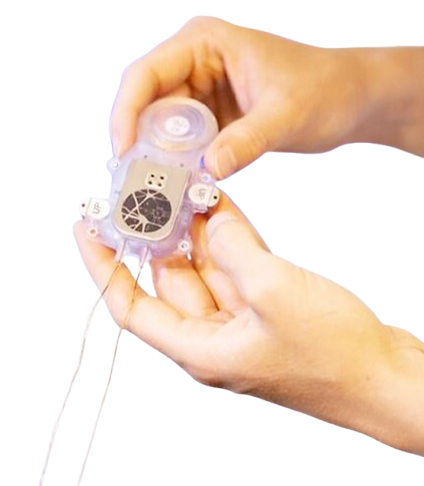
Under the guidance of BCI pioneer Prof. John Donoghue, the ABILITY system began as an ambitious Wyss Center research project in 2018 with lofty aims: a permanently implantable, hermetically sealed system capable of capturing full, highest resolution brain data in real time, and transmitting this via laser link to a discreet wearable device. AI and decoding algorithmics would then convert this high fidelity brain activity directly into communication, movement or other applications.
This combination - patient centric, fully implantable, discreet and able to transmit lossless data - establishes a new benchmark in BCI technology. ABILITY’s design prioritizes both precision and usability.
CEO and Co-founder Rotem Kopel emphasizes that the system has always been about more than technical excellence: “Every design choice at ABILITY is guided by patients’ needs for safety, discretion, real-world usability and superior outcomes. We are creating a platform with the capacity to transform the broader clinical environment to include the patients’ home settings and functioning in their daily lives.”
The move from research breakthrough to sustainable company accelerated with the appointment of Craig Cook as Chief Business Officer and Co-founder in June 2025. A seasoned venture builder who founded and co-founded several life science start-ups and architected multiple Wyss spinouts, Cook brings deep experience in fundraising, venture-building and team-building.
His arrival underscores the company’s readiness to scale. “ABILITY stands apart because of its clarity of purpose as much as for its engineering,” Cook explains. “We are creating a system and a platform designed to empower patients and clinicians, built to transform and endure.
That clarity of purpose is shared across ABILITY’s leadership team. Co-founders David Ibañez Soria (Head of Neural Decoding), Arnau Espinosa (Head of Systems Engineering), and Alain Jordan (Chief Technology Officer) each played pivotal roles in transforming a research vision into a clinical-grade platform. Together, they bring decades of expertise in neuroengineering, data analysis and implantable device design, bridging the gap between the lab and the lives the technology will serve.
Learn more about ABILITY’s founding team.
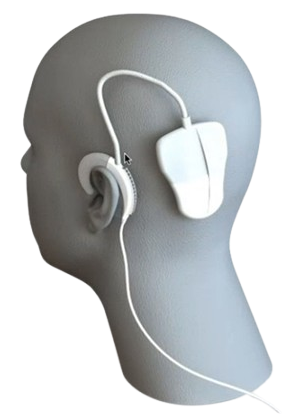
As Europe’s first fully implantable BCI company, ABILITY sets a new benchmark for the field - demonstrating what is possible when technical precision, privacy and durability guide innovation.
Kopel frames the vision this way: “BCI could be Europe’s technology moonshot. We are advancing category-defining science while respecting patient dignity, showing that neurotech can be both groundbreaking and patient-focused.”
With first-in-human trials planned for early 2026, ABILITY is setting a new standard for responsible, patient-first neurotechnology. What began as a bold vision at the Wyss Center is now a flagship company carrying forward a new standard for its science, values and value.

