ABILITY Neurotech Announces First-In-Human Testing for Novel Brain-Computer Interface Technology
Intra-operative Study with TU Munich Klinikum Rechts der Isar for First Use of ABILITY's Technology to Record Signals from the Human Brain
Generating the Platform's First Human Neural Dataset, the Study Signals the First Step in ABILITY's Mission to Restore Function for Patients Suffering Severe Neurological Impairment
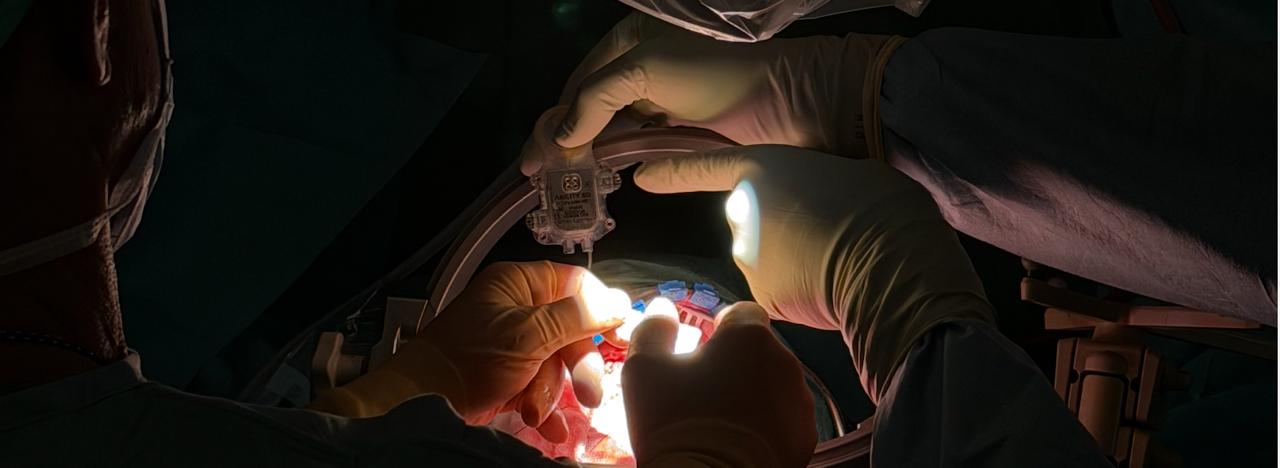
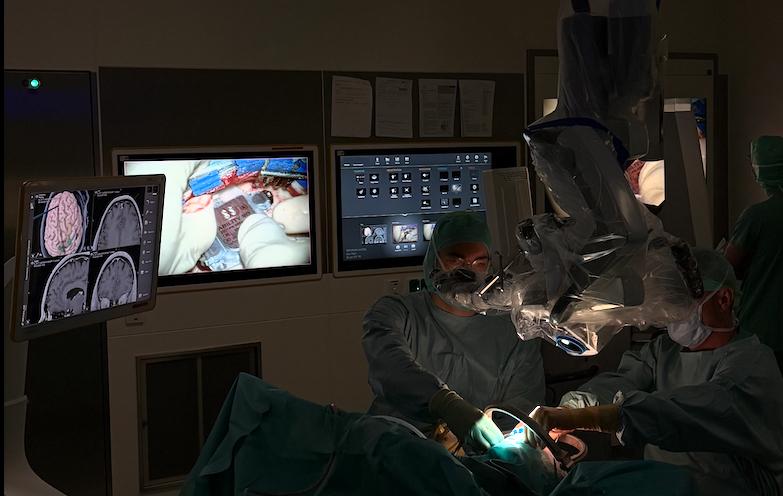
GENEVA – July 21, 2026 – ABILITY Neurotech announced today the first-in-human procedure for its BCI technology. Conducted at the Department for Neurosurgery at the Technical University of Munich (TUM) University Hospital Rechts der Isar, the procedure represents the first use of ABILITY's neural signal acquisition technology in a live surgical setting.
The study is led by Drs Wagner, Meyer and Jacob at the Department of Neurosurgery and Laboratory for Translational Neurotechnology, TUM University Hospital Rechts der Isar, TUM School of Medicine and Health. It will involve up to five individuals undergoing brain tumor surgery and in addition will capture neural data during 20–30 minutes of intraoperative recording for each patient. First patient underwent complete system performance testing and signal acquisition while under general anesthesia. The next stages of the study will target neural decoding under similar surgical conditions, with conscious patients engaging in speech and motor tasks.

"This procedure, recording neural data from humans for the first time, is a key milestone for ABILITY and our mission to enable safe and ethical long-term BCI implantations. The real-world validation of our signal acquisition system to capture high-quality neural data in patients brings us another step closer to restoring communication, movement and autonomy for those living with paralysis and speech loss."
Rotem Kopel, PhD
CEO, ABILITY Neurotech
ABILITY Neurotech's technology is purpose-built for safe, long-term implantation — and is now backed by its first human neural recordings. The company's fully implantable BCI is designed to capture raw, high-resolution brain signals and transmit massive amounts of lossless data at significantly higher bandwidth compared to standard Bluetooth-based systems. Its minimally invasive and patient-centric design is engineered for long-term implantation while maintaining high-fidelity neural data capture.

"This research allows us to capture known neural phenomena, including evoked potentials and high-gamma activity, and benchmark ABILITY's signal quality against established clinical electrophysiology systems. Establishing this scientific basis is what will allow brain-computer interface technology to mature responsibly from research into a reliable clinical tool."
Simon Jacob, MD
Professor of Translational Neurotechnology at the Department of Neurosurgery of TUM University Hospital Rechts der Isar
Conducted at one of Europe's leading neurosurgery departments, this project marks ABILITY's entry into the clinical stage. The successful generation of ABILITY's first human neural dataset in this early feasibility testing will be followed by the company's first long-term implantation study.

About TUM University Hospital Rechts der Isar
TUM University Hospital Rechts der Isar is the university hospital of the Technical University of Munich and the teaching and research hospital of the TUM School of Medicine and Health. Founded in 1834 and located in Munich, it is a supra-maximal care provider covering the full spectrum of modern medicine, with more than 1,100 beds and around 6,600 staff. Every year it treats 60,000 inpatients and 250,000 outpatients across its clinics and institutes.
Within the hospital, the Department of Neurosurgery (Klinik und Poliklinik für Neurochirurgie), directed by Univ.-Prof. Dr. Bernhard Meyer, is one of Europe's leading neurosurgical centers. Through its Working Group on Artificial Intelligence and Robotics in Neurosurgery and the Laboratory for Translational Neurotechnology led by Prof. Simon Jacob, the department has developed a research focus on brain-computer interfaces aimed at sustainably improving the quality of life of people with severe neurological impairment. In the summer of 2025, the team performed the first implantation of a microelectrode-based sensorimotor brain-computer interface in Europe, in a patient with a high-level spinal cord injury.
ABILITY Implant Technology
Want to learn more? Get in touch with our team.
Contact Us